Applied Marine Science for Aotearoa’s Coasts
Scientific research supporting conservation management and community stewardship / kaitiakitanga since 2015
Scientific research supporting conservation management and community stewardship / kaitiakitanga since 2015
years of active research programmes
Government-commissioned Vessel surveys
PhotoID – Theodolite – Acoustics – Behaviour – And more
Northland field operations
Emergency wildlife events responses
years of active research programmes
Government-commissioned Vessel surveys
PhotoID – Theodolite – Acoustics – Behaviour – And more
Northland field operations
Emergency wildlife events responses
Our primary long-term research effort — shaping conservation decisions while supporting communities and kaitiakitanga.
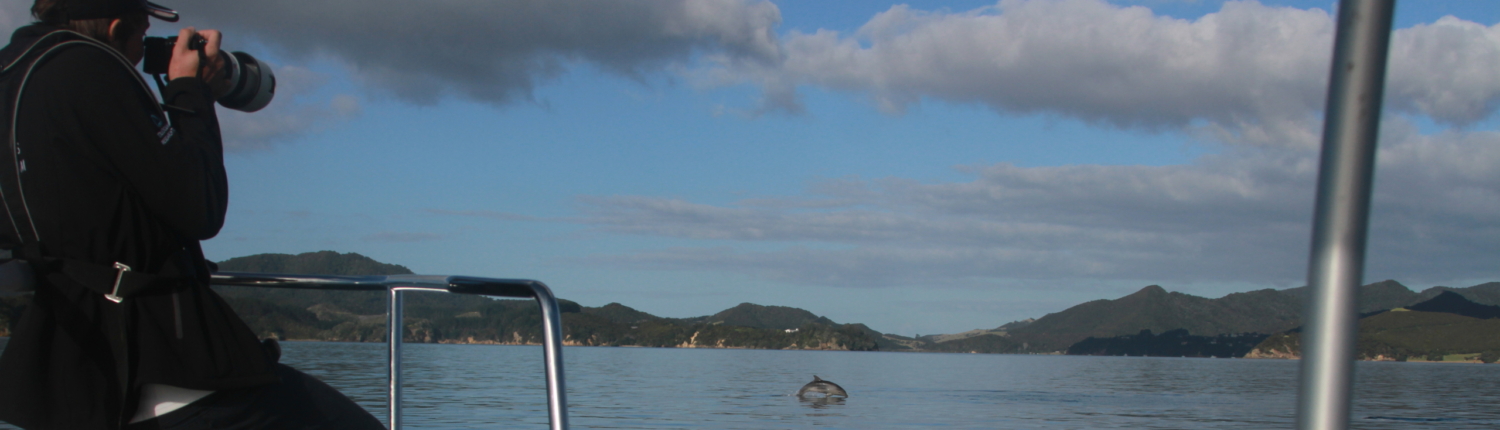
2017 - Photo-Identification snapshot
TriOceans undertook a baseline photo-identification study of bottlenose dolphins to document individual animals and assess short-term site use patterns across the Summer season
2018 - Laser photogrammetry & On-water education
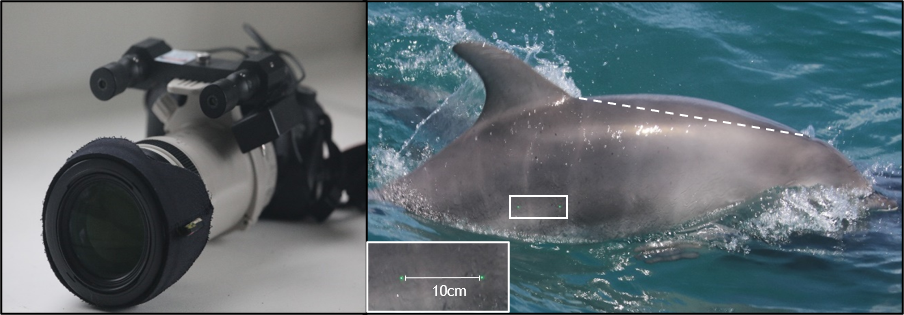 The TriOceans team used non-invasive laser photogrammetry to assess calf growth, while simultaneously engaging with vessel operators to increase understanding of current regulations.
2019 - 2022 - Long-term Individual Identification & Behavioural Analysis
TriOceans carried out year-round surveys along the coast from Doubtless Bay to Whangārei Harbour, with a sustained focus in the Bay of Islands.
Across multiple seasons, teams studied all marine mammal species encountered, documenting how animals responded to vessels, building long-term photo-identification catalogues, and tracking calf growth and survival. Data collected since 2017 were brought together to understand broader patterns in habitat use and behaviour.
Methods used:
• Vessel-based surveys – systematic transects
• Photo-identification
• Calf monitoring
• Vessel-interaction observations
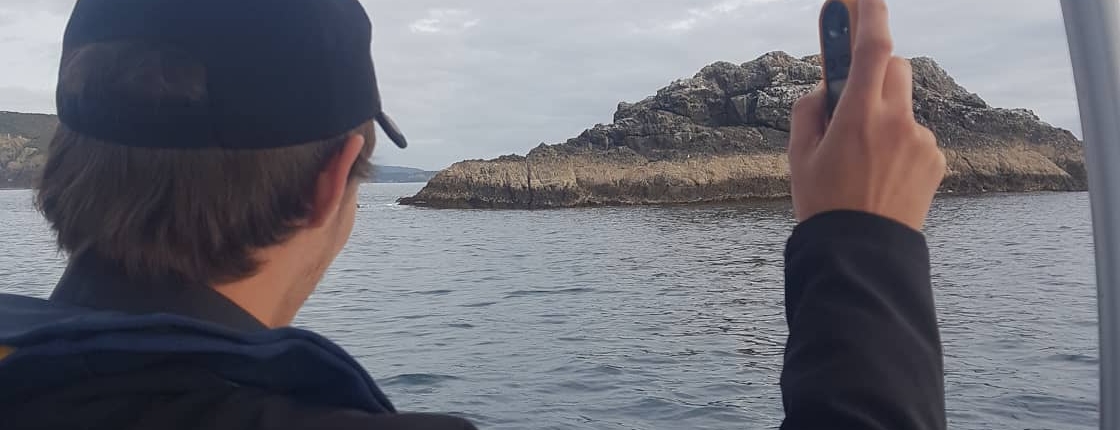
2022 - Bay of Islands Marine Mammal Sanctuary implemented by the Department of Conservation
In 2022, the Department of Conservation undertook a comprehensive review of marine mammal research conducted in the region since the late 1990s, drawing together findings from multiple long-running studies.
TriOceans contributed the most recent datasets to this process, alongside several other research programmes. Based on this body of evidence, a formal Marine Mammal Sanctuary was established in the Bay of Islands to strengthen protections and guide future management.
Learn more: https://www.doc.govt.nz/parks-and-recreation/places-to-go/northland/places/bay-of-islands-mms/
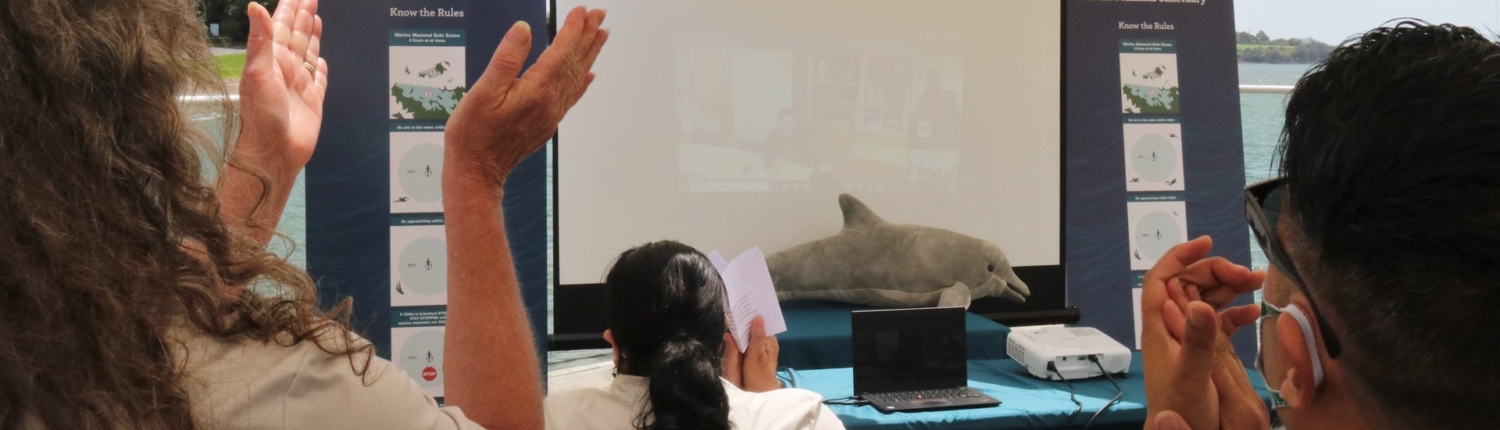
2022-2024 - Marine Kaitiaki Course
Between 2022 and 2024, TriOceans designed and delivered the Marine Kaitiaki course — a full-time, six-month training programme aimed at helping young locals begin careers in marine conservation and research.
Funded through Jobs for Nature and delivered in partnership with the Bay of Islands Marine Mammal Sanctuary Rōpū, the programme combined classroom learning with intensive field experience at sea.
Participants trained in marine biology and research techniques, gained diving qualifications (SCUBA and freediving), developed skippering skills, learned about government management processes, and engaged with mātauranga Māori alongside practical conservation work.
Programme focus areas:
• Marine ecology & field research
• Vessel operations & maritime safety
• SCUBA and freediving
• Regulatory processes & compliance
• Mātauranga Māori & kaitiakitanga
• Career pathways in the marine sector

2024 - Mark-recapture abundance estimates and emigration drivers (Earth Sciences collaboration)
In 2024, the Department of Conservation commissioned a comprehensive mark–recapture study to estimate population size and understand broader drivers of dolphin movement in the region.
TriOceans contributed its full long-term dataset to support the work, which was carried out by NIWA (Earth Sciences).
The final report combined these records with others dating back to the late 1990a, to produce a region-wide analysis.
Learn more: https://www.doc.govt.nz/globalassets/documents/conservation/marine-and-coastal/niwa-farout-boi-bottlenose-fullreport-final.pdf
2025 - Theodolite tracking and compliance monitoring
From December 2024 to June 2025, TriOceans conducted shore-based surveys at Tapeka and Motuarohia Island — two vantage points overlooking the sanctuary’s 5-knot vessel-speed zones.
Using high-precision theodolite tracking, teams recorded marine mammal movements in and around these areas while simultaneously documenting vessel behaviour. The programme examined how animals used the protected zones and assessed compliance with sanctuary rules and national marine mammal protection regulations.
This work strengthened fine-scale understanding of how protected areas function in practice and provided evidence to support ongoing management and enforcement.
Programme focus areas:
• Shore-based theodolite tracking
• Fine-scale movement patterns
• Vessel-speed compliance
• Sanctuary-zone use
• Regulatory monitoring support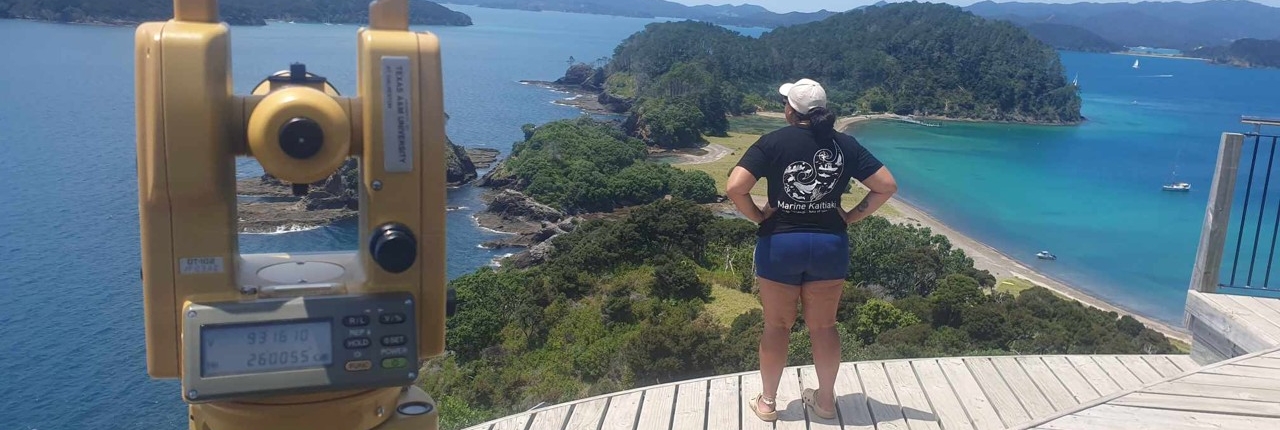

TriOceans is building a long-term underwater listening programme to complement our visual surveys and vessel-based monitoring across Northland: monitoring above, on, and below the surface.
We operate a towed hydrophone system from our research vessels and maintain a fixed seabed hydrophone platform ready for redeployment. These tools allow us to detect marine mammals beyond visual range, study patterns of presence and seasonality, and better understand how animals use busy coastal waters.
In the Bay of Islands, our longer-term goal is to establish a live underwater listening station — combining continuous monitoring with public access for education and citizen science. Delivered in partnership with iwi, government agencies, and research collaborators, this platform would support sanctuary management, vessel-compliance programmes, and rapid conservation decisions while strengthening community stewardship.
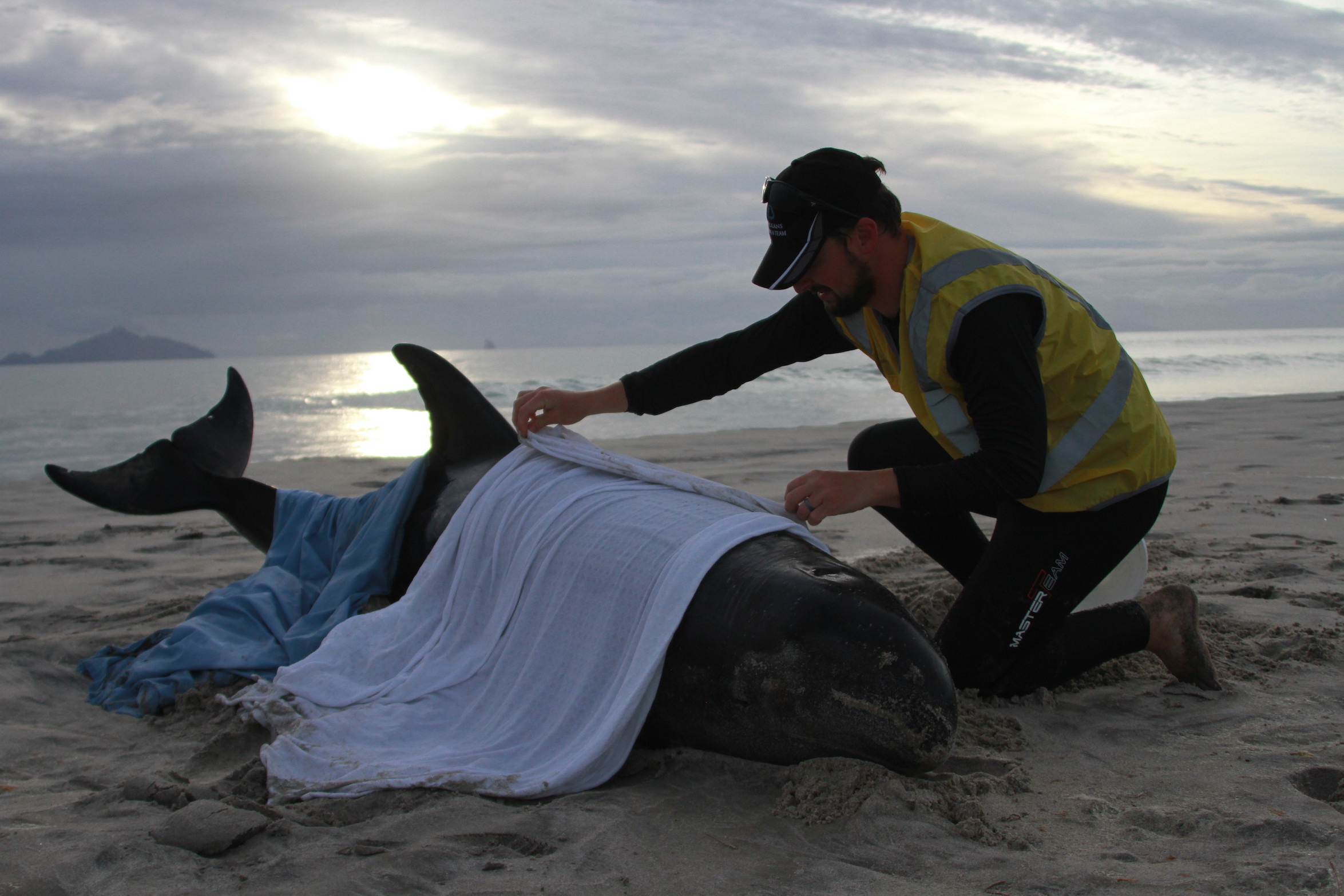
TriOceans supports marine mammal stranding responses across Northland, working within nationally coordinated systems led by the Department of Conservation.
For stranding events, our team assists with refloat attempts where animals can be returned to the water, and with field sampling when that is not possible. This includes collecting standardised measurements, photographs, and biological samples that are sent to partner research institutions to support national research programmes – our role is to provide safe, high-quality field support alongside lead agencies.
We are proud to work alongside the DOC and Project Jonah teams – Learn more about strandings at https://www.projectjonah.org.nz/
Alongside strandings, TriOceans contributes to New Zealand’s disentanglement response network. TriOceans contributes to this work by providing field assistance, hosting training exercises at Aroha Island, and supplying vessels and logistical support when required. Disentanglement is complex and dangerous work, carried out only by trained professionals under strict safety protocols. Both training and frontline response are provided on a voluntary basis, contributing nationally to animal welfare and conservation outcomes.
TriOceans runs hands-on coastal research projects grounded in kaitiakitanga o te moana— the responsibility of caring for the marine environment for future generations.
These initiatives focus on involving people directly in science: rangatahi, students, visitors, and local communities working alongside our team to better understand reef health, species distributions, and changes occurring in near-shore ecosystems.
Projects commonly include:
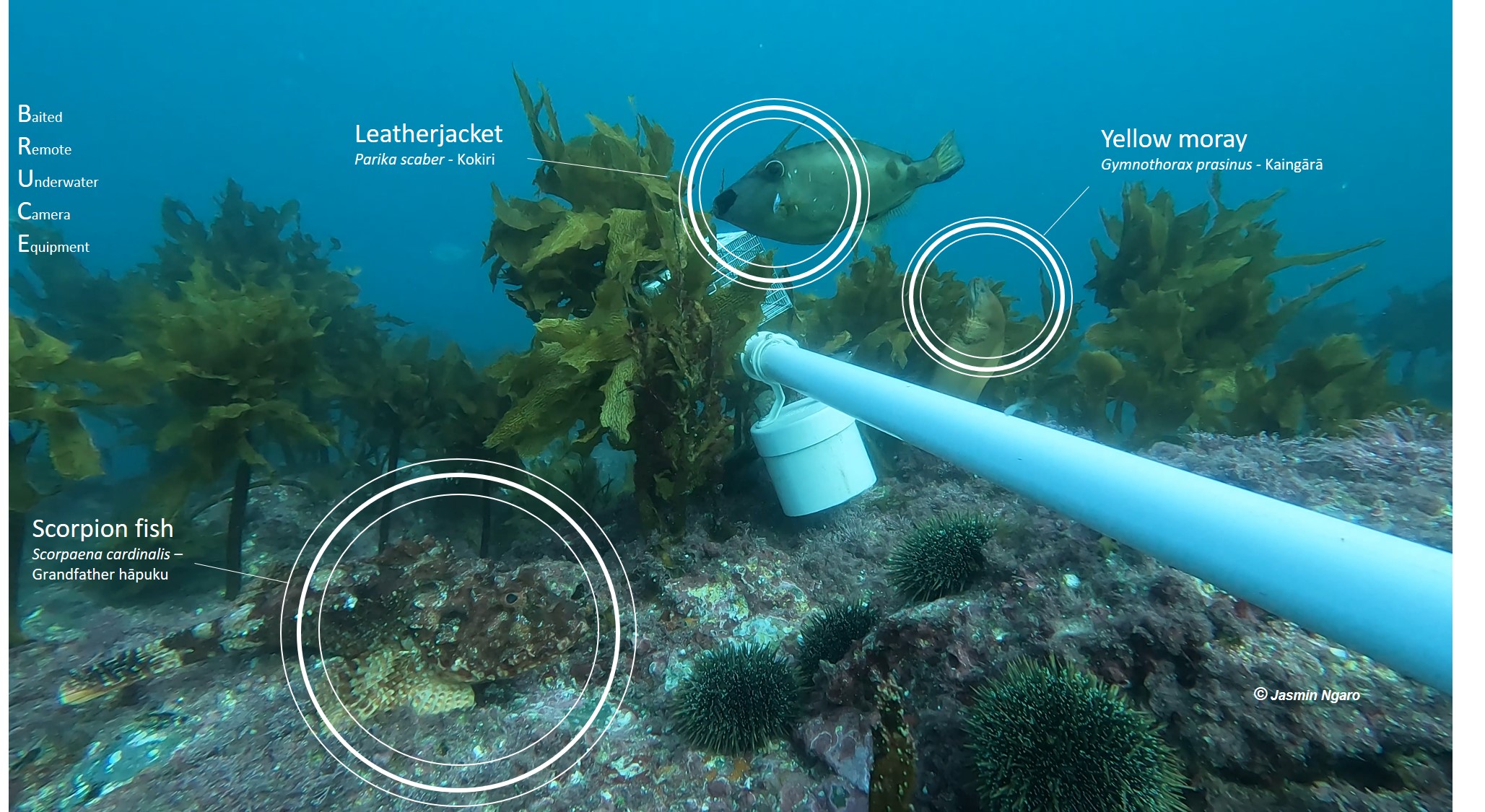
• Baited Remote Underwater Video (BRUV) surveys to document reef fish
• ROV deployments in shallow and complex habitats
• Kina barren mapping and recovery monitoring
• Mussel abundance surveys in mātaitai areas
• Snorkel-based reef transects
• Collaborative coastal biodiversity surveys
Many of these activities are delivered through our field courses and vessel-based programmes, linking research with education and real-world marine stewardship.
Want to get involved?
Explore our marine field trips and education programmes to see how you can join our crews on the water.